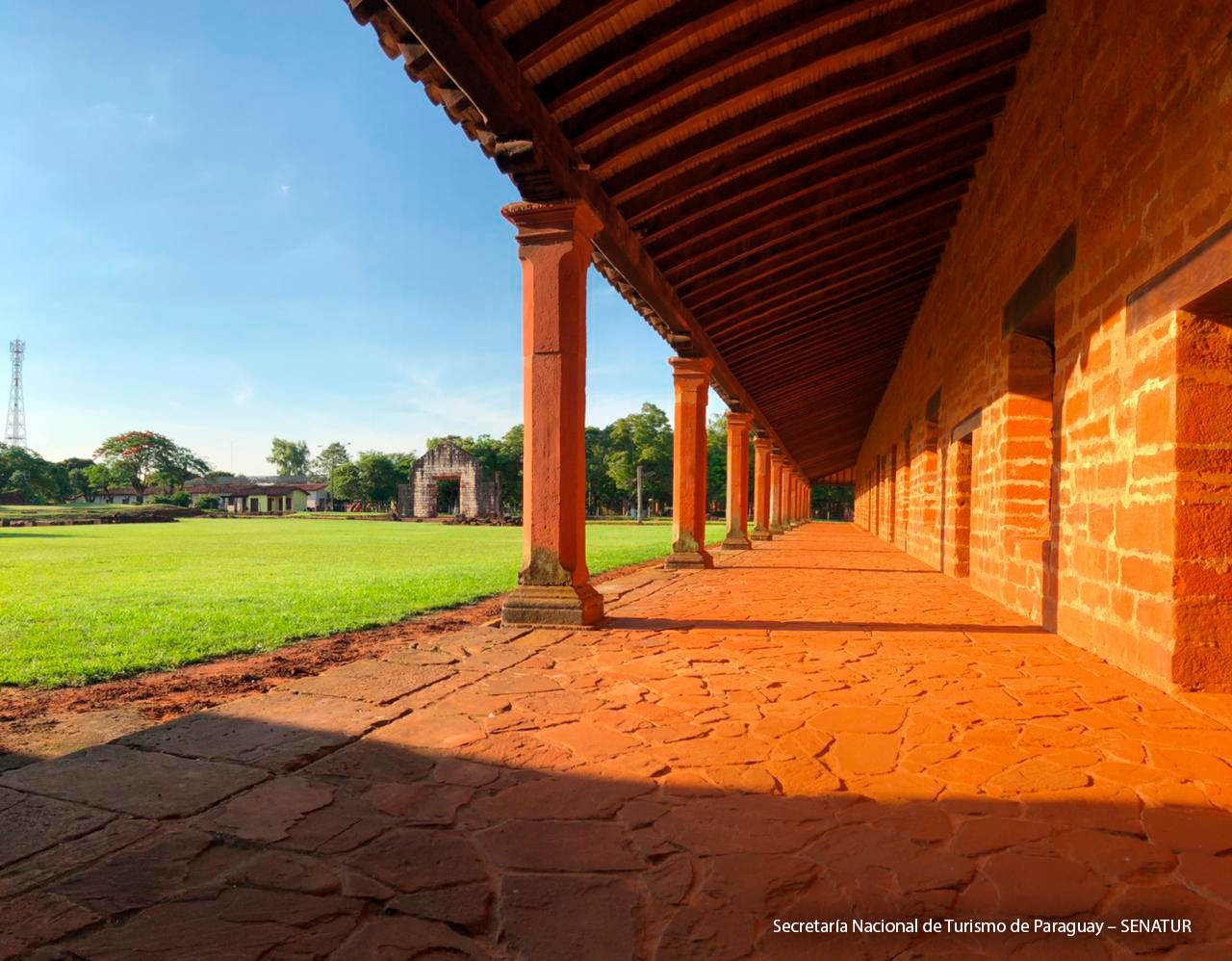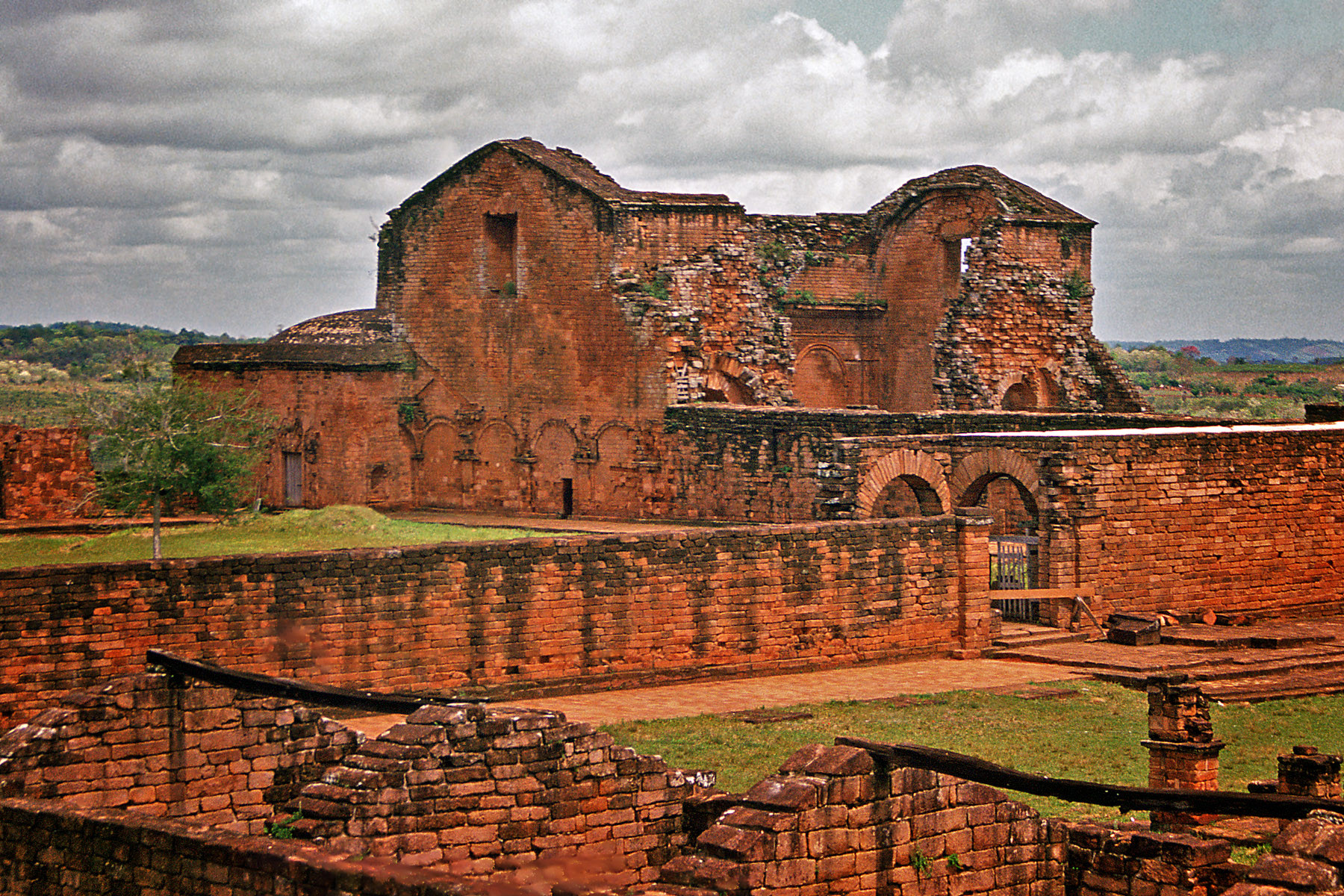
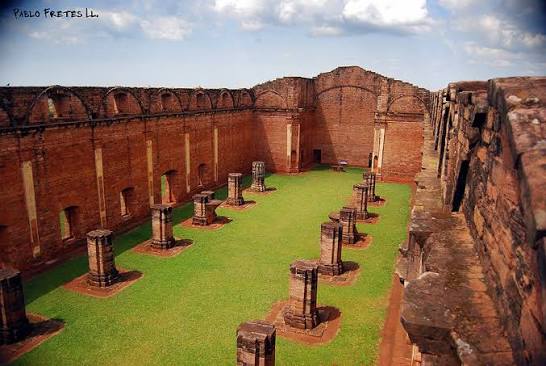
The Jesuit missions of Trinidad and Jesús de Tavarangüé, located in the department of Itapúa, are part of one of the most important historical and cultural sites in Paraguay. Both were declared UNESCO World Heritage Sites in 1993 and represent some of the best-preserved examples of the legacy of the old Jesuit reductions established in the region. The Mission of the Holy Trinity of Paraná is the largest and one of the most impressive in the country. Its complex is organized around a large central plaza and preserves remnants of the main church, indigenous houses, workshops, courtyards, and other community spaces. Among its most notable features are its sculptures and decorative friezes, especially the figures of angel musicians, which reflect the fusion between European religious art and the artistic contribution of the Guaraní people.
The Mission of Jesús de Tavarangüé is mainly known for its monumental unfinished church. Its construction was never completed due to the expulsion of the Jesuits from Spanish territories in the 18th century. Despite this, its large walls, arches, and proportions showcase the architectural ambition of the project. Together, both missions help us better understand how these communities were organized, the influence of the Jesuits in the region, and the significant cultural exchange that took place with the Guaraní people. Today, they are one of the most valuable testimonies of the colonial period and one of the main historical attractions in southern Paraguay.