Just like historic metropolises such as Rome or Lisbon, Asunción was born and grew on uneven terrain shaped by seven natural hills: Cabará, Volo Cue, San Jerónimo, Cachinga, Clavel, Mangrullo, and Cerrito Sansón Cue. This particular geography influenced from the very beginning of the colonial era the layout of its streets, the placement of homes, and the gradual expansion of the capital.
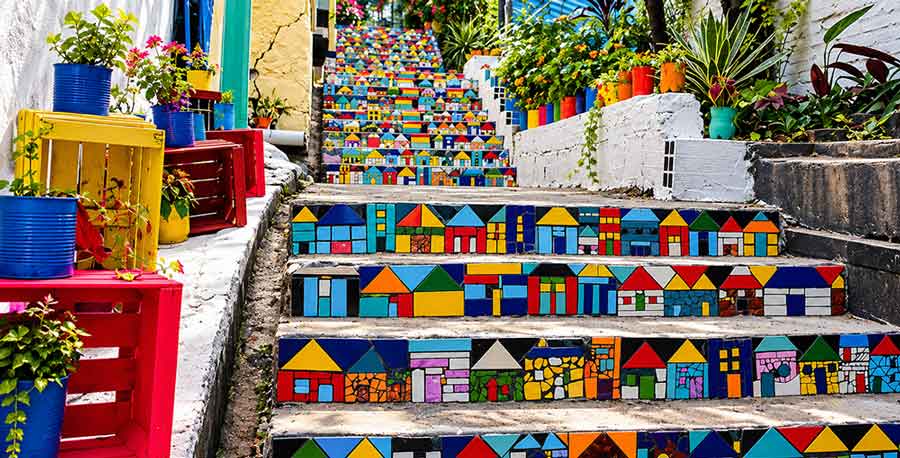
These changes in elevation gave personality to the traditional neighborhoods, giving the city charming sloped streets, natural viewpoints, and privileged views of the Paraguay River. Among them, the San Jerónimo hill stands out today, an iconic spot that maintains its own identity, marked by narrow passageways, artistic staircases, colorful facades, and a strong community spirit.
Even though urban growth and modern construction have transformed the original landscape over the centuries, the hills are still present in the daily rhythm of the city. They represent the living memory of Asunción's architecture and show how the Paraguayan capital learned to adapt to its natural surroundings to shape its distinctive scenery.